Friday, July 3, 2026

A Grail Grouping: Fort Shafter Attack Survivor and 417th Infantry Regiment CO


Colonel Philip Sheffield Greene graduated from the United States Military Academy with the Class of 1936. After attending the Infantry School at Fort Benning, Georgia, in 1939, he served a brief tour with the 3rd Infantry Division at Fort Ord, California, before being assigned to the Hawaiian Department Military Police Company at Fort Shafter in 1940. 

He was serving as the company duty officer on the evening of December 6 and the morning of December 7, 1941, when Japanese forces launched their surprise aerial assault on Pearl Harbor. As the island plunged into chaos, Greene’s routine garrison oversight shifted instantly to crisis command. He became a central point of contact for a massive influx of frantic inquiries, tasked with tracking personnel, securing vital installations, and managing a deluge of requests from military families and local civilians desperate for information on missing loved ones. This intense period of emergency operations culminated in May 1942, when he returned to the United States in charge of a transport vessel transferring Japanese internees from Hawaii to the continental United States. 

He subsequently joined the War Department General Staff in Washington, D.C., as Chief of the G-2 Central American Section, and following his graduation from the Command and General Staff College at Fort Leavenworth in May 1943, he was assigned to the Operations Division, Headquarters, Army Ground Forces, and promoted to lieutenant colonel.

Desiring a combat command, Greene requested a transfer and arrived in the European Theater of Operations in November 1944 with the 76th Infantry Division, taking command of the 3rd Battalion, 417th Infantry Regiment. By early 1945, the division was heavily engaged in the Rhineland Campaign, pushing toward the German border. On February 7, 1945, Greene led his battalion in a high-risk, amphibious assault crossing of the flooded Sauer River near Echternach, Luxembourg. Facing rapid currents, steep terrain, and heavily fortified German pillboxes under intense enemy artillery, mortar, and machine-gun fire, the operation was so tactically daunting that General George S. Patton remarked its sheer audacity was its chief virtue, as the terrain made a successful crossing seem nearly impossible. Despite these grueling conditions, Greene’s battalion successfully breached the German defenses and established a vital foothold that allowed the rest of the 417th Regimental Combat Team to advance into Germany. For their extraordinary heroism, determination, and indomitable fighting spirit during this critical operation, Greene’s battalion was awarded the Presidential Unit Citation.

Following the cessation of hostilities in May 1945, Greene was assigned to the G-2 Division, Assembly Area Command in Rheims, France, to plan and execute troop rotations, and later to G-2 EUCOM in Frankfurt. His duties as a staff intelligence officer included observing the Nuremberg war crime trials, monitoring the Soviet withdrawal from Czechoslovakia, and conducting liaison work with Allied Forces and the Papal Mission in Kronberg, earning him the French Medal of Gratitude. Returning to the United States in 1948, he served on the Army Personnel Records Board and held troop assignments with the 17th Airborne Division and the 3rd Infantry Division. In the early 1950s, he returned to West Germany as the Senior U.S. Army Intelligence Officer for Headquarters, Berlin Command, navigating intense friction and frequent casualties during the East German uprisings. His final assignment was as Professor of Military Science at Florida State University, where he oversaw the significant growth and integration of the Army ROTC program. He was promoted to colonel in December 1954 and officially retired from military service in February 1957.

As a collector of both 76th Division AND Pearl Harbor survivor militaria, I couldn’t ever ask for more out of a grouping.


Saturday, March 21, 2026

A Late-War Replacement in the 76th Infantry Division


Born in Snoqualmie Falls in 1921, PFC Ray J. Patrick was a dedicated educator and World War II veteran whose life was defined by leadership and service to the Pacific Northwest. After completing three years of college and beginning a career in teaching, Ray enlisted in the Army on July 6, 1944, entering combat later in the war as a replacement in the B-Company, 304th Infantry Regiment, within the 76th Infantry Division. Following his military service in the European Theater, he returned to Washington to serve as a teacher and coach in Shelton from 1945 to 1953 before rising through the administrative ranks as a principal in Buckley and eventually retiring as the Superintendent of the Evergreen School District in Vancouver. Ray passed away on January 9, 1986, leaving behind a legacy of academic excellence and civic duty that is honored today at Shelton Memorial Park.


Sunday, May 18, 2025

A Service Company, 304th Regiment Bronze Star Recipient

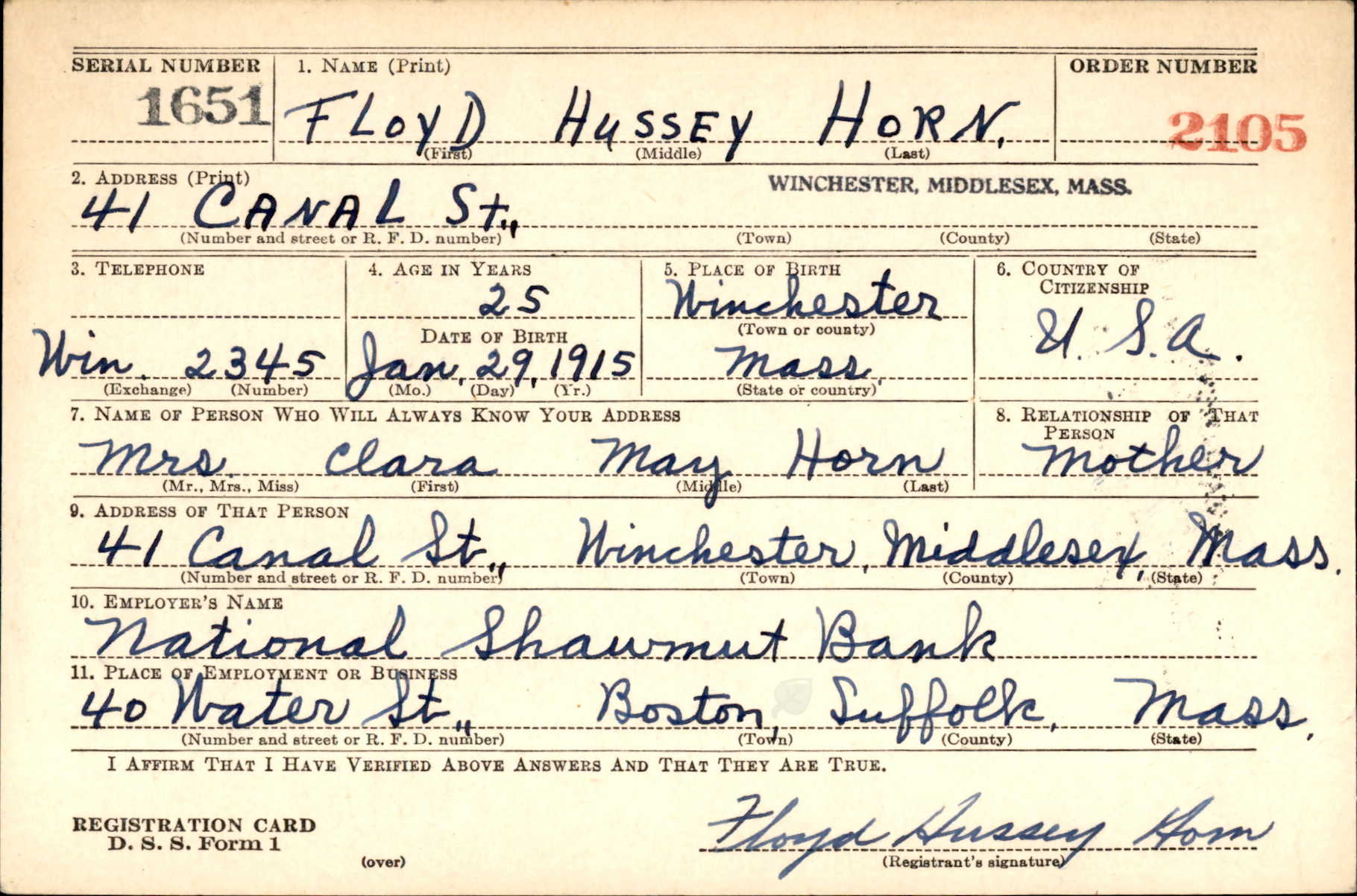
SSgt Floyd H. H-O-R-N was born in Massachusetts in 1915. He enlisted in May 1942 and joined the 76th Division upon completion of basic training. He was one of the original cadre of the 304th Infantry Regiment’s Personnel Section and served in all three campaigns with the 76th in the ETO and was awarded the Bronze Star Medal and CIB. He spent his remaining years as a banker and passed away in November of 1972. Being a “high points” man of the 76th, this jacket served as his shipping home uniform and came to me off eBay with the patches still on it. It has been painstakingly restored using all period original ribbons/insignia. 


Friday, February 14, 2025

A 302nd FA Bn / 76th Division BSM Recipient Joins the Lineup


CPT Emmett R. Nichols was born in 1910 and grew up in Massachusetts. He was a 1938 graduate of Northeastern Law School and landed a civilian career at the Prudential Life Insurance Company before entering the Army in 1942. He was first assigned to the Technical Training Command of the Army Air Forces, but was transferred to the Field Artillery when sent to Officer Candidate School. He was a member of Service Battery, 302nd Field Artillery Bn in the 76th Infantry Division where he was the Bn’s Motor Transportation Officer. 


He was awarded the Bronze Star Medal and all three campaign stars the 76th received.

He passed away in 1972 at the young age of 61.

This jacket is my first khaki 4-pocket to land in the collection and I like the contrast to the sea of olive drab!

Thanks for looking and reading!


Sunday, January 26, 2025

A Silver Star Medal, 385th Infantry Regiment Trunk Grouping


1LT Jack M. M-u-s-e was born in Kansas on March 14, 1923. He enrolled in Kansas State and entered in to R.O.T.C in 1941. In 1943 following the spring semester, he and his 53 member R.O.T.C detachment were shipped off to basic military training and then returned to Kansas State to await OCS. He then shipped off to Fort Benning in the winter of 1943 and was commissioned in March of 1944 (a month before my grandfather!)


He joined the 76th Infantry Division in the Anti-Tank Co, 385th Regiment in June of 1944 and ultimately landed as a platoon leader in L-Co for the units departure from the states on Thanksgiving Day 1944.


L-Co, 385th entered combat on the 28th of January with a barrage of heavy machine gun, mortar and artillery on the banks of the Sauer River in Echternach, dividing Germany and Luxembourg. The company would go on the offensive on 11 Feb into the Siegfried Line. 


On 27 February near Irrel, Germany, a mere 16 days later, 2LT M-u-s-e was subjected to an intense attack where he was wounded and was where the events took place that earned him his Silver Star Medal. (Partial citation below, full text in the photos) 

2nd Lt. Jack M. Muse, Company L ". . despite the intense fire . . continuously exposed himself in order to execute the safe withdrawal of his men . . refused medical attention until the enlisted man had medical attention first . ."

He was clinging to life with his arm hanging by (in his words) “a thread” as he made his way from field hospitals, to England, back to the U.S. 

He was still recovering in a Michigan hospital in January of 1947.

He went on to graduate with a degree in Agricultural Engineering from Kansas State and lived to the age of 95 in Colorado.

This trunk grouping was discovered in a Colorado Springs military/thrift store. It is insanely complete and there are hundreds of documents in the pocket folder. 90% are from his time at OCS and include every note, test, field exercise document, map, evaluation, and order from his time there.

Especially interesting are the 76th Division items included 3x field maps from Camp McCoy with his exercise/mission notes on them.